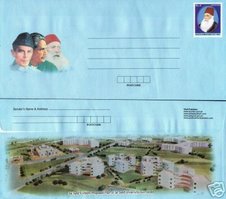
Founder Chancellor : Begum Sultan Jahan


H.H. Sultan Kaikhusrau Jahan Begum,
Ruler of Bhopal

Born: 9th July 1858, Princely state of Bhopal, India
Died: 12th May, 1930
Spouse:H.H. 'Ali Jah, Ihtisham ul-Mulk, Nasir ud-Daula, Nawab Ahmad 'Ali

Khan Bahadur of Muzaffar Nagar, Sultan Dulha Sahib, Nawab Consort of Bhopal
Father:General H.H. Nasir ud-Daula, Nawab Baqi Muhammad Khan
Mother:Sultan Shah Jahan Begum (29th July 1838- 16th June, 1901)

Ruler of Bhopal from 11th April 1845 to 30th April, 1860 &

2nd November 1868 to 16th June 1901)
Children:Nawab Hafiz Sir Muhammad Nasru'llah Khan Sahib Bahadur, KCSI
Al-Haj Mohsin ul-Mulk, Nawab Hafiz Muhammad Ubaidu'llah Khan

Sahib Bahadur, CSI
Al-Haj Nawabzada Hafiz Muhammad Hamidu'llah Khan

(Chancellor of AMU-Aligarh – 21st Sep. 1930 to 17th April 1935)
Sahabzadi Bilqis Jahan Begum
Sahabzadi Asif Jahan Begum


Career:
16th June 1901-29th April 926: Nawab Begum of Darul-Iqbal-i-Bhopal, Ruler of Bhopal
17th Dec.1920-12th May 1930:Founder Chancellor of Aligarh Muslim University, Aligarh
The first Indian woman to become a chancellor of an Indian University
1914: President. All-India Muslim Ladies Conference
1918: Founder, All India Ladies Association

Honors:

1st Jan 1910 :Knight Grand Commander (GCSI)
24th June, 1904: Knight Grand Commander (GCIE)
CI (1st Dec. 1911), GBE (27th Dec. 1917) Delhi Durbar gold medal (1903), Coronation medal (1911 with Durbar clasp), DGBStJ (17.3.1916),
20.8.1911: Order of Nobility (Nishan-i-Majidi) 1st class in brilliants of Turkey

Books Authored:
Bachoon Ki Parvarish
Gohar e Iqbal
Gule Khanda
Hayat e Shah Jahani (Persian)
Hayat e Shah Jahani (Urdu)
Rouzatur Riyaheen
The Story of a Pilgrimage to Hijaz
Hidayat uz-Zaujan
Sabil ul-Jinan
Tandurusti (Health)
Hidayat Timardari
Maishat-o-Moashirat


H.H. Sikander Saulat, Iftikhar ul-Mulk, Nawab Sultan Kaikhusrau Jahan Begum Sahiba, Nawab Begum of Darul-Iqbal-i-Bhopal, was born at Bhopal on 9th July 1858. She was eldest child of the family of H.H. Nawab Sultan Shah Jahan Begum Sahiba, Nawab Begum of Dar ul-Iqbal-i-Bhopal, and General H.H. Nasir ud-Daula, Nawab Baqi Muhammad Khan Bahadur, Umrao Dulha, Nusrat Jang. Her younger sister, Sahibzadi Sulaiman Jahan Begum Sahiba was born at Bhopal on 26th November 1860, but died from smallpox on 8th June 1865. So Begum Kaikhusrau Sultan Jahan, popularly known as Begum Sultan Jahan was only surviving child and heir of Darul-Iqbal-i-Bhopal. As per the Islamic and royal traditions of Darul-Iqbal-i-Bhopal, she was privately educated at the place. Her maternal grandmother, Nawab Sikandar Begum Sahiba paid special attention on her education. Qualified teachers and instructors were appointed for Urdu, Persian, Arabic and English. She was trained in horse riding, shooting and archery. She also learned handicraft, traditional arts and Calligraphy. Special attention were paid for Islamic and Quranic studies. On 30th October 1868, Begum Sultan Jahan’s grandmother Nawab Sikandar Begum Sahiba, ruler of Bhopal died due to kidney failure and H.H. Nawab Sultan Shah Jahan Begum took over the rein of Bhopal. Young Sultan Jahan Begum became the Crown Princes of Bhopal. Her strict academic schedule got affected due to her engagements with state affairs being as crown princes but she managed to continue her academic pursuit. She continued to receive Tafseerul Quran lessons from Maulvi Jamaluddin Khan and Persian lessons from Maulvi Mohammad Ayub. In spite of her busy schedules, she never missed her English lessons. Her acceptance speech at coronation ceremony was remarkable and long lasting impression on the attendees.
Begum Sultan Jahan was married to H.H. 'Ali Jah, Ihtisham ul-Mulk, Nasir ud-Daula, Nawab Ahmad 'Ali Khan Bahadur, Sultan Dulha Sahib, Nawab Consort of Bhopal at Shaukat Mahal, Bhopal on 1st February 1874. Nawab Ahmad 'Ali Khan Bahadur was born in January 1854 at state of Jelallabad of Muzaffar Nagar. Allah blessed them with 5 children; Nawab Hafiz Sir Muhammad Nasru'llah Khan Sahib Bahadur, KCSI, Al-Haj Mohsin ul-Mulk, Nawab Hafiz Muhammad Ubaidu'llah Khan Sahib Bahadur, CSI, Al-Haj Nawabzada Hafiz Muhammad Hamidu'llah Khan, Sahabzadi Bilqis Jahan Begum and Sahabzadi Asif Jahan Begum.

On 16th June1901, H.H. Nawab Sultan Shah Jahan Begum Sahiba, ruler of Bhopal died and Nawab Sultan Kaikhusrau Jahan Begum, the only surviving child of Sultan Shah Jahan begum became the Ruler of Bhopal. The official Installation ceremony was held on 4th July, 1901 at the Sadar Manzil, Bhopal. On 4 July 1901, Sultan Jahan assumed the title of ruler of Bhopal at the mature age of 43 after serving 33 arduous, harrowing years under Shah Jahan as heir apparent. All three preceding Begums had mounted the masnad at a young age – Qudsia Jahan was 19 when she became regent of Bhopal, Sikandar Jahan was regent of Bhopal at 26, while Shah Jahan was titular ruler of Bhopal at the age of seven and full fledged Begum of Bhopal at 30. As she was proclaimed ruler of Bhopal, Sultan Jahan looked older then her 43 years. Immediately after Begum Shah Jahan’s death, the British moved quickly to announce her succession as ruler of Bhopal. The Investiture Durbar was held at Sadar Manzil of Bhopal, at which Mr. Wyndham represented Lord Curzon, the Viceroy and Governor-General of India, the first assistant to the resident. Soon after becoming the Ruler of Bhopal, begum Sultan Jahan lost her husband. Nawab Ahmad 'Ali Khan Bahadur died on 4th January 1902 in Bhopal. As Sultan Jahan took over the states administration, she found that the cupboard was bare. Shah Jahan and her henchmen had dissipated the finances to the extent that the state was heavily in debt and only 40,000 rupees were left in the treasury. A fighter by nature, Sultan Jahan resolved to put matters right, rolled up her sleeves and began the uphill task of rehabilitation and revival. For over a year Sultan Jahan built up her own team of upright and conscientious officials who helped her put the ship of state back on an even keel Sultan Jahan’s first task was to gain confidence of her rural subjects and helping Bhopal recover from Shah Jahan’s lax and divisive rule. Sultan Jahan’s visit to the outlying villages was not simply representational tours, but serious attempts at seeking solutions to agrarian problems. The atmosphere was all work and austerity, with long hours spent listening to the plaints of village folks. There was no shikar, polo playing or midnight revelry as in Shah Jahan’s days, but an ambiance of rigorous hard work for herself and her staff. She inducted her grown-up sons, Nasrullah and Obaidullah, into the process of governance and administration and even “little Hamid”, her eight-year-old third son, accompanied his mother to be given a taste of royal responsibility. She further advanced the emancipation of women and established a modern municipality in 1903. By 1911, King Edward VII of England had died and George V was to be crowned. Sultan Jahan was invited to attend the Coronation in London. Sultan Jahan left heir apparent Nasrullah in Bhopal to hold the fort while she took Obaidullah, his wife Shahryar Dulhan, Hamid and his child bride Maimoona Sultan with her on her journey to Europe. She attended the coronation of King George V in 1911 dressed in a burqa with her awards worn on the outside. During the trip, she visited Paris, a spa in Bad Nauenheim in Germany, spent a week in Genève and travelled by the Orient Express to Istanbul, where she met the sultan-emperor, Mehmet Reshad. She also visited Hungary, Italy and Egypt where she embarked on her return journey to a Bhopal struck by plague. Later that year she attended the Imperial Dunbar in Delhi. She introduced free compulsory primary education in 1918. She Established an Executive and Legislative Council in 1922. A great reformer, like her mother and grandmother, she reformed taxation, the army, police, the judiciary and jails, expanded agriculture, and constructed extensive irrigation and public works. She established an appointed state council and legislative assembly, and instigated elections for municipalities. However, her main legacy is public health, by pioneering widespread inoculation and vaccination program, improving sanitation, hygiene and the water supply. On 29th April 1926, while still away from Bhopal in London, Sultan Jahan informed the secretary of state for India, Lord Stamfordham that she was abdicating as Begum of Bhopal in favor of her son, Al-Haj Nawabzada Hafiz Muhammad Hamidu'llah Khan. A decision that stupefied the British ministers. There was another flurry of legal controversy in the Viceroy’s Secretariat questioning the Begum’s right to abdicate as ruler of Bhopal. The Begum refused to accept, and the British eventually accepted on 17th May 1926 accepting Hafiz Hamidullah Khan as the ruler of Bhopal. . After her abdication, she became an advocate of women’s right. The peaceful rule of Begums led to the rise of a unique mixed culture in Bhopal. The Hindus were given important administrative positions in the state. This led to communal peace and a cosmopolitan culture took its roots.

H.H. Begum Sultan Jahan died on 12th May 1930 at Qasr-e-Sultani Palace in Bhopal and buried near the grave of Pir Zia ud-din.

Association with Aligarh Movement:

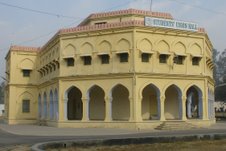
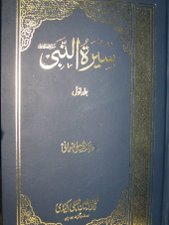
The royal family of Bhopal was always supportive to Aligarh Movement. H.H. Begum Shah Jahan supported Scientific Society, donated a sum of 10,000 Rupees for M.A.O. College Jama Masjid construction. Begum Sultan Jahan was very much supportive to the vision and mission of Sir Syed Ahmad Khan. She took over the rein of Bhopal after the death of Sir Syed, but always helped M.A.O. College with a great generosity. When Nawab Viqarul Mulk was Secretary of College, a better understanding was developed between M.A.O. College and Begum Sultan Jahan. In 1910, she enrolled her son, Hafiz Hamidullah Khan to M.A.O. College Aligarh. This represented an historic step for the Bhopal royal family, as Hafiz Hamidullah Khan was the first of its members to be given a formal university education. She and other members of the family donated a sum of 50000/- Rupees for College building fund. All India Muslim Educational Conference established by Sir Syed Ahmad Khan was also receiving regular support from Begum Sultan Jahan. She visited Aligarh on 27th February, 1914 and laid the foundation stone of All India Muslim Educational Conference building. This building is now known as “Sultan Jahan Manzil”. When H.H. Agha Khan stopped his annual financial help to the College, H.H. Begum Sultan Jahan persuaded him to continue his support for the College. H.H. Agha Khan was convinced and restarted his annual generous donation to College Fund. In annual session of Muslim Educational Conference in 1910, the idea of Muslim University was made public and H.H. Agha Khan and Nawab Viqarul Mulk visited H.H. Begum Sultan Jahan in Allahabad. She immediately donated 100,000/- (One Lakh Rupees for the cause of Muslim University). She also promised to donate money for electricity and electrical appliance for the College. She extended her full support for Muslim University and promised to talk to other princely states, landlord and wealth people and specially to H.H. Nizam of Hyderabad for their support for Muslim University. When the fund raising for Muslim University was started, Bhopal was one of the Provincial Center and Begum Sultan Jahan took a lead role to raise funds. She made encouraging speeches at different places including Price of Wales Ladies Club. She accepted the plaque of Honor from The MAO College Trustees and visited Aligarh to inaugurate Sultan Jahan Building in 1915. She had an open discussion with Trustees and MAO College staff. She gave invaluable advises to the students, staff and Trustees. She also fully financed Allama Shibli Nomani’s Seeratun-Nabi publication. Even after the death of Allama Shibli Nomani, H.H. Begum Sultan Jahan supported Allama Shibli’s designated heir and disciple Maulana Syed Sulaiman Nadvi.

H.H. Begum Sultan Jahan paid attention to women education and supported Mohammad Girls School of Aligarh started by Sheikh Abdullah (Papa Min). The management of Girls school was looking for an acceptable curriculum but due to lack of funds were a major roadblock. H.H. Begum Sultan Jahan paid special attention and donated generously to develop a proper curriculum for women education. She took personal interest and developed an outline of curriculum and presented it in her Presidential address of the women education session of the annual Muslim Educational Conference on 5th December 1911. She proposed the idea of Home science in the curricula of women education to make it more attractive for majority of the community. In her visit to Aligarh in 1915, she inaugurated the Girls School building laid the foundation stone for girl’s hostel.

On December 17th, the Aligarh Muslim University came into being. According to the act (Section III) the first Chancellor, the first Pro-Chancellor and the first Vice-Chancellor were to be appointed by the Governor General of India. In an Annexure the act gave a list of 124 Foundation members of the First AMU Court. The Governor General of India, Lord Chelmsford appointed H.H. Mohammad Ali Mohammad, Raja Mahmudabad as its first Vice- Chancellor. Her Highness Sultan Jahan Begum of Bhopal and H.H. Sir Agha Khan were respectively appointed as Chancellor and Pro-Chancellor of the Aligarh Muslim University. The inaugural ceremony of University took place on the 17th December, 1920.

In spite of her busy schedule Begum Sultan Jahan used to participate in University Function. She presided over the First Convocation of newly established Aligarh Muslim University on 28th December, 1922. In her presidential address, Begum Sultan Jahan said;
“We meet today to celebrate the First Convocation of our University, the fruit of fifty years of our national exertion and aspirations. To the pioneer of this movement, Sir Syed Ahmad Khan, Mohsinul Mulk and Viqarul Mulk, who first saw the vision of a common and united centre of Muslim culture, and who devoted their lives to its realization, the nation owes a great debt of gratitude. Great would have been their happiness to see their efforts crowned with success. With this noble system of education at the back, The University will rear the genius of men like, Averroes and Avicenna (Ibn Sina), Sheikh Saadi, Al-Ghazali, Ibne Musa, Abu Maashar-i-Falaki, Shah Waliullah, Shah Abdul Azeez, Haali and Shibli, who will rekindle the spark of Islamic civilization and usher in a brighter and more glorious era in the annals of Islam.”

Begum Sultan Jahan also addressed the annual convocation of 1925. She extended her support and served as Chancellor of Aligarh Muslim University till her last breath. After her sad demise on 12th May 1930, her son, ruler of Bhopal and M.A.O. College alumnus, Nawab Hafiz Hamidullah Khan was elected as Chancellor of Aligarh Muslim University.

Founder Vice-Chancellor: Mohammad Ali Mohammad, Raja Mahmudabad


H.H. Sir Mohammad Ali Mohammad,

Khan Bahadur, Raja Mahmudabad

Father’s Name: Amirud-Daulah Raja Amir Hasan Khan
Grandfather: Raja Nawab Ali Khan (Fought in the first war of independence in 1857).
Date of birth: June 4th, 1878, Mahmudabad, Sitapur (UP)-India
Died: March 23, 1931
Children: 2 daughters, 2 sons. Elder son Raja Amir Ahmad Khan became Raja Mahmudabad after the death of his father Sir Muhammad Ali Mohammad Khan.

Career:
Raja Mahmudabad – 28th June 1903 to December, 1931.
Trustee MAO College: 1906-1920
Member: UP legislative Council 1904-1909
Member: Council of Governor General of India 1907-1920
Founder: Lucknow University (UP): 1920
Home Minister: 1920-26 First Indian Member of The Administrative Council of
Sir Spencer Harcourt Butler, Governor of United Province.

President: Sessions of the All India Muslim League in 1917, 1918 and 1928.
Member Council of State: 1927, Elected unopposed as Member of Council of States.
Host: Muslim Educational Conference: 1904 Lucknow
President: Muslim Educational Conference: 1909 Rangoon

Founding Vice-Chancellor of Aligarh Muslim University:
17th December 1920 to 28th February, 1923.


His Highness, Sir Mohammad Ali Mohammad Khan of Mahmudabad, popularly known as Raja Mahmudabad was born on 4th June, 1878 in the royal estate of Mahmudabad, in Sitapur (United Province) India. After completing his primary education of Arabic, Persian and Urdu in Mahmudabad, he joined English School for modern education. His father, Amirud-Daulah Raja Amir Hasan Khan died on 28th June, 1903 and the young Mohammad Ali Mohammad Khan became the Raja of Mahmudabad. The official coronation was held on 1st January 1905 in the presence of Governor of United Provence. The estate of Mahmudabad had its rule over a large part of Barabanki, Sitapur, Balrampur and Nanparah. Raja Mahmudabad was very humble, kind, generous and nationalist person. His hospitality was known in the nation. He was a poet and extensively wrote “Marsia” with pen name of “Mohib”. He spent his life and wealth for community and nation building. On 1st January, 1920, Montego-Chelmsford Report recommendations were implemented and a friend of Raja Mahmudabad, Sir Spencer Harcourt Butler was appointed as Governor of UP. Sir Harcourt Butler appointed Raja Mahmudabad as Home Minister in his Administrative Council. Raja sahib was first Indian to be a member of Sir Butler’s administrative council. He served in the council till 1926. He played a key role in Indian freedom struggle. When Indian national Congress leaders, including Motilal Nehru was jailed in Lucknow, Raja sahib helped in their release. He played a key role to make Lucknow as the capital of UP and foundation of Lucknow University. He became Trustee of MAO College in 1906. He was also actively involved in the campaign for a Muslim University. On 17th December, when M.A.O. College became Aligarh Muslim University, Raja Mahmudabad was appointed as its founding Vice-Chancellor. For his passion for the community services, he was honored with K.C.S.I. and became Sir Mohammad Ali Mohammad Khan Bahadur.

Raja Mahmudabad died on March 23rd, 1931. His eldest son, Raja Amir Ahmed Khan, who was born on November 5, 1914, took over the rein of Mahmudabad at a very young age. Raja Amir Ahmed Khan also became popular as 'Raja Sahib of Mahmudabad', was a gifted disciple and trusted associate of Quaid- e-Azam at a very early age.


Founder of Lucknow University:
The idea of starting a University at Lucknow was first mooted by Raja Sir Mohammad Ali Mohammad Khan, Khan Bahadur, K.C.I.E. of Mahmudabad, who contributed an article to the columns of "The Pioneer'' urging the foundation of a University at Lucknow. A little later Sir Harcourt Butler, K.C.S.I., K.C.I.E, was appointed Lieutenant-Governor of the United Provinces, and his well-known interest in all matters under his jurisdiction, specially in matters educational, gave fresh life and vigour to the proposal. The first step to bring the University into being was taken when a General Committee of educationists and persons interested in university education appointed for the purpose, met in conference at Government House, Lucknow, on November, 10, 1919. At this meeting Sir Harcourt Butler, who was in the chair, outlined the proposed scheme for the new university. A discussion followed, and it was resolved that Lucknow University should be a Unitary, Teaching, and Residential University of the kind recommended by the Calcutta University Mission, 1919, and should consist of Faculties of Arts, including Oriental Studies, Science, Medicine, Law, etc. A number of other resolutions was also passed and six sub-committees were formed, five of them to consider questions connected with the University and one to consider the arrangements for providing Intermediate Education. These sub-committees met during the months of November and December, 1919, and January, 1920; and the reports of their meetings were laid before a second Conference of the General Committee at Lucknow on January 26, 1920; their proceedings were considered and discussed, and the reports of five of the sub-committees were, subject to certain amendments, confirmed. The question of incorporation of the Medical College in the University, however, was for the time being left open for expression of opinion. At the close of the Conference donations of one lakh each from the Raja of Mahmudabad and Jahangirabad were announced.
The resolutions of the first Conference together with the recommendations of the sub-committees as confirmed at the second Conference were laid before a meeting of the Allahabad University on March 12, 1920, and it was decided to appoint a sub-committee to consider them and report to the Senate. The report of the sub-committee was considered at an extraordinary meeting of the Senate on August 7, 1920, at which the Chancellor presided, and the scheme was generally approved. In the meantime the difficulty of The Court of the University was constituted in March, 1921, and the first meeting of the Court was held on March 21, 1921, at which the Chancellor presided. The other University authorities such as the Executive Council, the Academic Council, and Faculties came into existence in August and September, 1921. Other Committees and Boards, both statutory and otherwise, were constituted in course of time. On July 17, 1921, the University undertook teaching -- both formal and informal. Teaching in the Faculties of Arts, Science, Commerce, and Law were being done in the Canning College and teaching in the Faculty of Medicine in the King George's Medical College and Hospital. The Canning College was handed over to the University on July 1, 1922, although previous to this date the buildings, equipment, staff, etc., belonging to the Canning College had been ungrudgingly placed at the disposal of the University for the purposes of teaching and residence. The King George's Medical College and the King George's Hospital were transferred by the Government to the University on the March 1, 1921. The following three Colleges provided the nucleus for the establishment of the University:
The King George's Medical College. (Now Known as King George's Medical University)
The Canning College.
The Isabella Thoburn College.
This was a rich inheritance for the new-born University in 1920, both materially and intellectually, and it brought with it also the richest of all heritages "a fine tradition of some fifty-five years in the case of the Canning College and some nine years in the case of the King George's Medical College." To this the generous taluqdars of Oudh added an endowment of nearly thirty lakhs. The support from Sir Harcourt Butler's Government was strong and hearty. Since then the Government of the United Provinces has annually contributed a substantial share towards the maintenance of the University.


Association with Aligarh Movement:

Raja Mahmudabad, H.H. Mohammad Ali Mohammad, Khan Bahadur, was always keen in helping the community and specially Muslims of India. He was a strong believer of Sir Syed’s vision and follower of Aligarh Movement. He was convinced that educational development of Muslims of India will lead to a strong community and nation. Due to his passion for educational upliftment of Indian Muslims, he fully financed the 1904 session of Muslim Educational conference held in Lucknow under the chairmanship of Nawab Mohsinul Mulk. He also donated fifty thousand rupees (Rs.50,000/-) for scientific educational development at Mohammedan Anglo Oriental (MAO) College of Aligarh. In 1906, he was appointed as one of the trustee of MAO College Management Committee. In 1906, he joined a deputation which waited on Lord Minto, Governor General of India, under the leadership of H.H. Sir Agha Khan to demand for the religious and constitutional rights for Muslims of India. His strong commitment for the educational development of Indian Muslims led him to preside the 1909 session of Muslim Educational Conference in Rangoon at a very young age of 31 years. Raja sahib always supported the campaign for the Muslim University.

On December 17th, the Aligarh Muslim University came into being. According to the act (Section III) the first Chancellor, the first Pro-Chancellor and the first Vice-Chancellor were to be appointed by the Governor General of India. In an Annexure the act gave a list of 124 Foundation members of the First AMU Court. The Governor General of India, Lord Chelmsford appointed H.H. Mohammad Ali Mohammad, Raja Mahmudabad as its first Vice- Chancellor. Her Highness Sultan Jahan Begum of Bhopal and H.H. Sir Agha Khan were respectively appointed as Chancellor and Pro-Chancellor of the Aligarh Muslim University. The inaugural ceremony of University took place on the 17th December, 1920.

On 17th December, 1920 Raja Mahmudabad joined as Founding Vice-Chancellor of Aligarh Muslim University and immediately gave a generous donation of One Lakh rupees to College fund. The first meeting of University Court was held on 21st march, 1921 under the leadership of Raja sahib and Nawab Syed Mohammad Ali, the Honorary Secretary of M.A.O. College, was elected Honorary Treasurer, Dr. Ziauddin Ahmad, Principal of M.A.O. College, was made Pro-Vice Chancellor. Syed Sajjad Hyder, a member of the Court, was appointed Registrar and Mr. Abul Hasan, who had been Assistant Secretary of the College, was appointed Personal Assistant to the Vice-Chancellor. As the University ordinances had not yet been framed, the Government of India invested the Vice-Chancellor with extraordinary powers to deal with all matters of detail. Vice-Chancellor, Raja Mahmudabad put extra efforts to give a shape to the newly established University. To avoid delay and dislocation, he appointed Nawab Syed Mohammad Ali as his delegate to finish the works which he was not able to complete as Honorary Secretary. In Raja sahib’s leadership during 1922-23 the Executive regulations were framed. On the recommendation of Calcutta University Commission, a separate Intermediate College was started comprising of class IX, X, XI and XII and Major E. W. Dann was appointed its Principal. Later Prof. Abdul Majeed Quraishi was appointed as its Principal and Major Dann was requested to establish department of Geography.

The period of Raja Mahmudabad as Vice-Chancellor was a tough time. Due to the Non-Cooperation Movement, the student strength fell to 512 from 838. Vigorous efforts had therefore to be made to retrieve the position of institution. Administrative reorganization, need for coordination and financial difficulties were major issues to be addressed immediately. Notwithstanding the financial and other limitations, Raja sahib thus visualized its development programme. “A Training College for teachers is a crying necessity. A Technological institution is no less urgently needed. Provision for the study of the sciences of medicine and surgery will have sooner or later to be made.” Raja sahib did some significant addition to the staff of the University. Dr. D.N. Mallick, professor of Presidency College Calcutta joined AMU as Professor of Physics and Chemistry. Mr. Mohammad Habib, who obtained Honors from the University of Oxford was appointed as professor of history. Mr. N.K. Mukerji was appointed principal of the Training College. Raja sahib’s generous contribution of one lakh rupees made possible to purchase 193 bighas of land for the expansion of University. During his tenure as VC, a lot of constructions were done e.g. Completion of Clock tower, Osmania Hostel, School Staff Quarters, Enclosure Wall round Minto Circle, Completion of the half western wing of Osmania Hostel and Intermediate College lecture Rooms.

The Vice-Chancellor, Raja Mahmudabad resigned with effect from March 1, 1923 due to pressure of his official duties as Home Minister in U.P. Government. Even after resigning from AMU as its Vice-Chancellor, his association with the University was never diminished. Aligarh Muslim University honored one of his great mentors by naming a hostel after him. Mahmudabad Hostel is part of Sir Shah Sulaiman Hall

Principal MAO College : William A.J. Archbold


William A.J. Archbold

Born: 1865 - England
Died: 1929 - England

Principal of MAO College: 16th October, 1905 to 31st Oct, 1909

Founder Secretary: Appointment Association, University of Cambridge

Secretary: Board of Indian Civil Services Studies

Books:
Twentieth-Century Essays & Addresses
Outlines of Indian Constitutional History (British Period)
Bengal haggis; the lighter side of Indian life

The romantic movement in English literature; a series of illustrative passages arranged with an introduction and brief biographies
Essays on teaching of history
The Somerset Religious Houses. Prince Consort Dissertation, 1890
Editor: Dictionary of National Biography.


William A. J. Archbold was born in England in 1865. He completed his graduation in Law in 1887. After completing his Law degree, he received WHEWELL SCHOLARSHIP in 1888 and started working as editor for Dictionary of National Biography. He established Appointment Association in University of Cambridge and served as its founding Secretary for 3 years.

In 1905 when Prof. Theodore Morrison resigned from the position of Principal MAO College, Mr. Archbold was working University of Cambridge and writing a book on French History for Cambridge University Press. MAO College made an offer to Mr. Archbold for principal MAO College which he accepted. A delegation of MAO College Old Boys comprising Shaikh Abdullah, Barrister Rafiuddin, Syed Abid Hussain and Sahebzada Aftab Ahmad Khan went to Bombay to receive him. Mr. Archbold was known as an able administrator before his joining as Principal of MAO College.

Mr. Archbold was well aware of his responsibilities as MAO College Principal. AT one occasion of dinner he said; “No one would succeed in the work, who did not have sympathy with the history, traditions, and aspirations of the MAO College.”

In the early 20th century i.e. in May 1906, the MAO College Students' Union had passed a resolution for Hindu-Muslim cooperation to fight against British imperialism. Mr. Archbold, Principal, Mohammadan Anglo Oriental College, therefore in August 1906 had tried to ensure the 'aloofness of the students from political agitation'. But the national and international development had created such a context that forced MAO College to produce many leaders, who asserted against the British imperialism and had joined the national movement of agitational politics which bore many fruits, including few Head of States


Mr. Archbold played a notable role in organizing Muslims Deputation which waited on the Viceroy, Lord Minto at Shimla, 1st Oct. 1906. The 1906 delegation to the viceroy was an announcement by John Morley, the secretary of state for India that his government proposed to introduce constitutional reforms in India. When Nawab Mohsin-ul-Mulk, Secretary MAO College Board of Trustees, heard about it, he wrote to Mr. Archbold, Principal of MAO College, who was then vacationing at Shimla. In his letter, Nawab Mohsin-ul-Mulk emphasized the importance of the occasion and asked Archbold to inquire whether Lord Minto, would receive a delegation of Indian Muslims, who wished to put before him their views about the projected constitutional reforms. The viceroy agreed. That initiative, as Bimal Prasad has emphasized (and documented), came entirely from Nawab Mohsin-ul-Mulk; not even from Archbold, let alone the British.


Mohammad Ali's phrase `command performance' was baseless and mischievous. When Nawab Mohsin-ul-Mulk got the green light from Shimla, a Memorial was prepared and discussed with some Muslim leaders at Lucknow. The big issue of the day that concerned both the Viceroy and the Muslims of the new province of East Bengal and Assam was the powerful ongoing agitation to annul the Partition of Bengal. Nawab Salimullah of Dacca and Nawab Ali Choudhury insisted at Lucknow that the Memorial should ask for an assurance that the Partition would not be annulled. But Aligarh Movement Leaders was not interested in that issue, which was not even mentioned in the Memorial. Nawab Salimullah of Dacca, therefore, refused to join the delegation although Nawab Ali Choudhury participated in the delegation.The viceroy too appears to have been disappointed that the Bengal Partition issue was not included in the Memorial. Lord Minto took it up on his own bat. In his reply, he reminded "The Mahomedan community of Eastern Bengal and Assam [that they] can rely as firmly as ever on British justice and fair-play." The delegation had asked for separate electorates and a fairer quota of representation in the viceroy's council, his executive council, in provincial councils and on senates and syndicates of the Indian Universities. They had reiterated the demand for a Muslim University. They sought a Muslim quota in the government service and the appointment of Muslim judges on the Bench. These were all predictable demands of the Muslim Salariat and professionals. In response, Lord Minto "promised … nothing, except sympathy.”So much for the `command performance'! Even the memorandum presented by them to Lord Minto had been carefully drafted, agreed upon and settled in advance between Mr. Archbold, the Principal of Muhammadan Anglo Oriental College and Dunlop Smith, the Private Secretary to the Viceroy. The British Government in India had taken advance action to give the widest publicity to this whole affair in the British Press in London, how India was not one nation, how it was not suited for democratic institutions, how Muslims were standing by the Empire and how Muslim patriotism and statesmanship had pricked the bubble of the treasonable Bengal Hindu agitators.


From the time of Sir Syed, European staff of MAO College were very powerful and during Nawab Mohsinul Mulk’s Secretaryship, they became even more stronger, specially Principal of MAO College were acting way beyond there authority due to their closeness with British Empire in India. After the death of Nawab Mohsinul Mulk, Nawab Viqarul Mulk was elected unanimously Secretary by the Board of Trustees of MAO College and took over charge in January 1908 at the age of 67. He had sharp differences with the European staff of College but Sir Syed and Nawab Mohsin-ul-Mulk believed in Anglo Muslim alliance. He, therefore, tried to put the necessary checks on the unquestionable authority of the Principal, which led to a serious clash between him and the European staff resulting in the resignation of Principal Archbold. The matter became so serious that it went to the level of Lt. Governor. However, Viqarul Mulk did not yield on the question of autonomy of the Institution. From a political point of view, his secretaryship was hard and stormy but he worked with courage.


After resigning from MAO College Aligarh in 1909, Principal Archbold served as Principal of Govt. College Dacca and then Muir Central College Allahabad.

Principal MAO College: Theodore Morrison


Theodore Morrison
Born: 1863, England
Died: February, 1936 England
Father’s Name:
Professor of English at MAO College: 1889 to 1899
Principal of MAO College: 29th October, 1899 to 1st March, 1905)
Founder Secretary Old Boys Association: 1890-1899
Finance Secretary MAO College
Visitor: MAO College
President Muslim Educational Conference
Member-Secretary of Secretary of State’s Council: 1906-1916
Books: The Industrial Organization of an Indian Province

Prof. Theodore Morrison, a graduate of University of Cambridge, founder of Proctorial System of MAO College, founder Secretary of Old Boys Association, guardian and guide of Sir Ross Masood and Principal of M.A.O. College was born in 1863 in England. After completing his education from University of Cambridge, he joined department of education. He was appointed as educational advisor to young rulers of Chattarpur (Bundel-Khand) and Charkhari (Hamirpur) and moved to India.


Association with MAO College and Aligarh Movement:

In the year of 1889, he was appointed as a Professor of English at MAO College. He was very kind and full of love for his students. At the same time he was much disciplined and never tolerated any indiscipline in college campus. He served as a professor in college till 1999. He served almost 10 years as a Professor of English at MAO College. He was having great respect for Sir Syed and Sir Syed also loved him. Prof. Morrison was very popular among the students. In 1999 he went to England for vacation and resigned from his teaching job of MAO College. This was a big loss for MAO College. On 2nd September, 1899 Principal Theodore Beck died in Shimla and MAO College offered the job of Principal to Prof. Theodore Morrison which he accepted and joined the new job on 29th October 1899.

The 5 year tenure of Prof. Morrison as MAO College Principal was among distinctive period of MAO College. He paid much attention to the educational upliftment of MAO College. He paid special attention to the discipline of MAO College and established Proctorial System at MAO College. Hostel life of MAO College became disciplined and peaceful. He took keen interests in discipline and hygiene of student’s community. The college discipline was in good shape during his tenure as Principal. He was very affectionate to his students but never compromised on discipline issues. He established Proctorial system in the college and appointed Mir Wilayat Hussain as Proctor. He enforced student’s 24-hour time table. He equally enforced discipline among his staff and never tolerated indiscipline in their teachings and schedules. His disciplined approach paid and the college results were improved and student strength started growing. In 1899 when he joined as principal, student strength were 465 but 1903 it became 713. At the same time the performance of the students were also on the rise. From 1900 to 1904, the rate of success in B.A. examinations was between 71% and 79%. Principal Morrison paid attention to other activities of students and promoted The Siddons’ Club. To improve Arabic conversation and communication, he established “Lahjatul-Adab”. He also established “Anjuman Urdu-e-Moalla” to promote writing and oratory skills among college students.

Principal Morrison also paid attention to the religious studies. He created a position of Dean of Theology. He promoted the Darse-Quran program which used to be given by Allama Shibli in the Strachey Hall and asked Nazim-e-Diniyat, Maulana Abdullah Ansari to continue. He made Namaaz (Salat) compulsory for Muslim students and asked Prayer Monitors to keep record of the students coming for prayers. He also requested staff and member of Trustees present in College to follow the same to set an example. Principal Morrison also paid attention towards sports. He had a keen interest in riding so paid key role to establish The MAO College Riding Club in 1893. Due to his interest in riding, he was also known as “Sipaahi Morrison”.

Principal Morrison was a big advocate of teacher taught relationship and promoted the relationship event if the student or staff member is no more in the College. He also started an Employment Bureau to help the students to get a job. He used to keep student records with his personal remarks so that upon the request of the government he can furnish the record to help the students. H e always used his influence t help MAO College students for a better placement in the jobs.

Principal Morrison was also appointed as Finance Secretary of MAO College. He helped a lot to improve the financial condition of the college. He started new techniques so receive donations for College. He was himself a big financial contributor for the college. He kept a clean financial records allowed regular audit for a better financial management. He tried to control the college expenses as per its budget. But at the same time he never ignored the well being of College staff. He gave proper increment in the pay and grades to the college staff. Even being as a European, he never did any kind of discrimination among his European and Non-European staff. He was also elected as President of Muhammadan Educational Conference in December, 1904 at Aligarh. In 1905 he took early retirement from MAO College and moved back to England. Even then he was a part of Aligarh Movement and always took keen interest in helping MAO College and Aligarh Movement. He made several visit to MAO College from England and proved his belief of teacher taught relationship. For his contributions and key role and active participation in Aligarh Movement, MAO College board of Trustees elected him as a Visitor MAO College.

After 1920, when MAO College became Aligarh Muslim University, Principal Morrison was honored by naming one of the hostel and road as “Morrison Court” and “Morrison Road” respectively.

Principal MAO College : Theodore Beck


Theodore beck
Born: 1859, England
Died: 2nd September 1899: Shimla (Buried at Shimla)
Father’s Name: Joseph Beck
Principal of MAO College: 28th January 1884 to 2nd September, 1899)
Founder Assistant Secretary of Muslims Education Conference: 1886-1899
Founder Honorary Registrar of MAO College: 29th March 1898-1899

In the year of 1859, Theodore Beck was born in the family of a poor businessman Mr. Joseph Beck. Mr. Joseph Beck was a running a small business of Optical, telescope and photographic equipments. With his hard work and sincere efforts, Theodore Beck joined Cambridge University where he met Syed Mahmood and became his close friend.

Association with MAO College and Aligarh Movement:

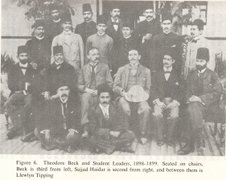
In May 1883, Hennery George Impey Siddons, founder principal of MAO College resigned from Principalship of MAO College. Sir Syed wrote a letter to Syed Mahmood in England and authorized him to find a suitable person for English and Philosophy who can also be appointed as Principal of MAO College as and when if needed. Syed Mahmood was on a personal trip to England. He contacted his old friend of Cambridge, Theodore Beck and offered him the position of English and Philosophy Professor and persuaded him to accept the position and move to India. Theodore Beck had just finished his education from Cambridge University and was just 24 years old. But he accepted the challenge and moved to India and joined the MAO College as a Professor of English and Philosophy and also assumed the office of Principal of MAO College on 28th January, 1884.
He could have never imagined that his career will start as MAO College Principal at the age of 24 and will end his with his last breath at the age of 40 as Principal of MAO College and will become the longest serving Principal of MAO College and champion of Muslims education in India. When he joined MAO College at the age of 24 years, some of his students at MAO College were older than him. He was a soft spoken, humble and very cooperative young man. Very soon became very popular among the students. His abilities and interests in College administration made him indispensable for Sir Syed and MAO College. His attitude towards students made him popular among the students. He used to do evening walk with senior students, visit dining halls to have meals with students and do some formal chat in an informal way. He used to make sure to visit those students who are sick and spend sometime with them so that they can not miss their families at the tough time. He used to help needy students from his pocket. He was a very hard working teacher also. At one point of time due to lack of staff members he taught four subjects so that students can not suffer due to lack adequate staff strength. His friendly as well as disciplined attitude made him insensible for Aligarh Movement and he was associated Aligarh Movement till his last breath.

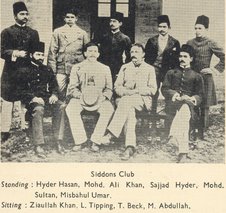
Sir Syed was a big admirer of Theodore Beck’s administrative abilities and commitment for Aligarh Movement. In 1886 when Sir Syed started Muslim Educational Conference and became Founder Secretary of Muslim Educational Conference, he appointed Principal Beck as Assistant Secretary of Muslims Educational Conference. Principal Beck promoted the idea to have to have a debating club for students. The idea was originally put forward by his predecessor, Principal H.G.I. Siddon. Principal Beck named the debating club as SIDDON’s CLUB to honor The Founding Principal of MAO College. It was Siddon’s Club contribution that MAO College and Aligarh Movement have prolific orator and debators like, Sahebzada Aftab Ahmad Khan, Maulana Shaukat Ali, Maulana Muhammad Ali Jauhar, Maulana Zafar Ali Khan and Sarfaraz Hussain. He also started the famous Riding Club

Sir Syed’s political ideology was to distance himself and Muslims of India from active politics and never have confrontation viewpoints with the British rule. He was convinced that Muslims of India can not bear the burden of another mutiny. Principal beck was an ardent supporter of Sir Syed’ political thoughts and always promoted Sir Syed’s political thought to help Muslims of India to uplift them on educational front to compete with others. There is a common mis-conception that Sir Syed’s political vies were inspired by Principal Beck. This concept does not have strong roots as Sir had already expressed his political views even before starting The MAO College and he never deviated from his political ideology.

Theodore Beck & Syed Mahmood:
After the death of Sir Syed Ahmad Khan on 27th March 1898, Syed Mahmood became Secretary to The Trustees of MAO College. On 29th March 1898, Syed Mahmood appointed Principal Beck as Honorary Registrar of MAO College. This appointment leads some crises among the trustees of MAO College and they thought Syed Mahmood is handing over the College to British rule. But Syed Mahmood was firm in his decision and his decision was based on the efficiency and ability of Principal Beck. When Syed Mahmood had some strong differences with The Trustees of MAO College Management, Principal Beck tried to pacify Syed Mahmood and advised him to bring the Trustees closer to him.

Theodore Beck’s Death:
During the summer of 1899, Principal Beck was not feeling well and went to Shimla for his treatment. His health started detoriating. He had a surgery for his lever but never recovered from the problem and on 2nd September, 1899 the die-hard fan of Sir Syed and Aligarh Movement took his last breath in Shimla.

Founding Principal MAO College : H.G.I. Siddons


Henry George Impey Siddons
Born: 1851, Died: After 1931 Wales (UK)
Father: Capt William Young Siddons (1815-1851)
Mother: Emma Frederica Louisa Grant
Founding Principal of MAO College: 23rd June 1875: 28th January 1884
(Joined the office on 28th June 1875)

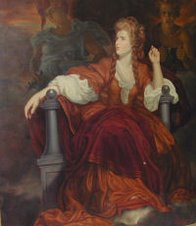
Henry George Impey Siddons was born in the same year 1851 when his father died. He was a great grandson of Sarah Siddons (July 5, 1755June 8, 1831), a British actress, the best-known tragedienne of the 18th century. His father Capt. William Young Siddons (1815-1851) was a military officer posted in India.

Henry George Impey Siddons, an Oxford graduate was appointed as founding Head Master of Madarsatul Uloom (later became MAO College) on 23rd June 1875. He assumed the charges of his office on 28th June 1875. After 2 years, Madarsatul Uloom became Mohammadan Anglo Oriental (MAO) College. Foundation stone of the college was laid be Lord Edward Robert Lytton, Governor General of India on January, 8th 1877. Mr. H.H.I. Siddons took over as MAO College’s Founding Principal. He was an able administer and educationist and took keen interest in the development of College.

Mr. H.G.I. Siddons started a debating club for students to promote debating skills among the students. Later on the students debating club was renamed to honor him and is known as Siddons Club. In 1883 he tendered his resignation and laid down the charges of his office on 28th January 1884. After living Aligarh, he joined Colvin Taluqdars School in Oudh started by Sir Auckland Colvin (1838-1908), Lieutenant Governor of the North West Provinces and Chief Commissioner of Oudh.

Sir Thomas Walker Arnold


Sir Thomas Walker Arnold

Born : 19th April 1864, London (England)
Died : 9th June 1930, London (England)
Wife : Celia Mary Hickson (Married in 1892)

Professor M.A.O. College : 1888-1898
Founding Keeper (Secretary) Duty Society AMU Aligarh
Founding President of Anjuman Taraqqi Urdu
Teacher, Student and friend of Allama Shibli Nomani
Famous students : Sir Allama Mohammad Iqbal, Syed Sulaiman Nadvi

Books:
i) The Legacy of Islam
ii) The Spread of Islam in the World: A History of Peaceful Preaching.
iii) The Caliphate iv) A literary History of the Arabs.
v) Paintings in Islam

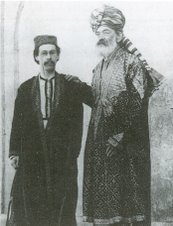
Wearing turban, churidaar payjamaa, Angarkha and with a polite voice asking MAO college student to go for prayers and doing the headcount at mosque gate was a routine extra activities of a british by birth, a philosphy professor by profession, an orientalist by his pen, and one of the most popular eauropean staff member of MAO College and a true aligarian by his heart. This is a brief introduction of Prof. Sir Thomas Walker Arnold alias Maulana Arnold.
Prof. Thomas Walker Arnold was born on
19 April 1864 and educated at the City of London School. He entered Magdalene College, Cambridge University in 1883. On the recommendation of Mr. Theodore Beck, Mr. Arnold was offered a professorship in philosphy at MAO college, which he accepted whole heartedly. From 1888 he worked as a Professor of Philosphy at the MAO College, Aligarh. In 1898, he accepted a post as Professor of Philosophy and Principle at the Government College, Lahore and later became Dean of the Oriental Faculty at Punjab University. From 1904 to 1909 he was on the staff of the India Office as Assistant Librarian. In 1909 he was appointed Educational Adviser to Indian students in Britain. From 1917 to 1920 he acted as Adviser to the Secretary of State for India. He was Professor of Arabic and Islamic Studies at the School of Oriental Studies, University of London, 1921-1930.
But of all Arnold's works, Painting in Islam is of the greatest value to the student of Muslim, and particularly Persian, painting. It set a new standard of scholarship in the subject, for the author's long apprenticeship in Arabic and Persian gave him free access to the original sources; his deep interest in the religion and culture of Islam enabled him to see Islamic painting in its true setting and proportion. At the same time his humanity makes the book an eminently readable account of a somewhat abstruse subject. He went to previously untapped sources for many of his illustrations and examples—the Bodleian Library, the Royal Asiatic Society, and the India Office Library (where he had been Assistant Librarian from 1904 to 1909)—and thus widened the field of research for his successors. In his preface he emphasizes that he has not attempted to write a general history of Islamic painting, the “purpose of the book is rather to indicate the place of painting in the culture of the Islamic world,” and it has thus never been superseded by later works of a strictly art historical nature.
Important early works of Arnold were his two books The Preaching of Islam; a History of the Propagation of the Muslim Faith (London, 1896, 1913, 1935) and The Caliphate (Oxford, 1924; reprinted. London, 1965). Arnold became the first English editor for the first edition of The Encyclopedia of Islam. He co-edited the first edition of The Legacy of Islam (Oxford, 1931; repr. London, 1952) with A. Guillaume; and with R. A. Nicholson he edited A Volume of Oriental Studies Presented to Edward G. Browne (Cambridge, 1922).
Arnold exposed Indian muslim poet
Muhammad Iqbal to western culture and ideas, and served as a bridge for Iqbal between the ideas of the east and west. He was made Companion of the Order of the Indian Empire in 1912, and in 1921 was given a Knighthood by the Crown and became Sir Thomas Walker Arnold. He married Celia Mary Hickson in 1892. He died on 9 June 1930.


Association with MAO College and Aligarh Movement:

At the age of 23 years, Mr. Arnold completed his education and at the behest of Mr. Theodore Beck, Principle, MAO College, he accepted a position of Professor of Philosphy in MAO College in 1888. He was an orientalist and had great passion for oriental studies. He had special interests in foriegn languages so he learned Sanskrit and frence during his studies and learned persian and arabic at MAO College. Due to his special interest in oriental studies and eastern culture, he was well suited at MAO College and adopted eastern dress code also. He used to dress payjama, angarkha and turban and look like a Maulvi. Due to to this Sir Syed used to address him as Maulana Arnold. Due to his young age, good attitude and soft language, he was very popular among the students. Mr. Arnold, Mr. Theodore Beck and Mr. Theodore Morrision created a very conginioul atmosphere for intellectual interface with external scholars. They used to invite external scholars to have interface, speeches and ellocutions, and the best students performer used to get an award from Mr. Arnold.
Mr. Arnold were a urdu loving person so always promoted Urdu language in the college and presided the first meeting of Anjuman Tarraqi Urdu. For urdu poetry he was a big follower of Sir Syed and used to encourage students to follow Maulana Haali in urdu poetry.
When Sahebzada Aftab Ahmad Khan, started Duty Society, 1889, Prof. Arnold played a very active role and became its founding Keeper/Secretary. Prof. Arnold completed his famous book, Preaching of Islam during his stay at MAO College. In the book “The Spread of Islam in the World: A History of Peaceful Preaching”, Prof. Arnold proved with strong evidence that Islam was never spread with swords, it was always spread by peaceful preaching. Sir Syed was very happy with this great work of Prof. Arnold. The whole Muslim community was grateful for Prof. Arnold for such a noble work.
After 10 years of great service to the MAO College, Prof. Arnold became a well known orientalist and scholar. In 1897, he resigned from MAO College and joined as a Principle at Oriental College, Punjab University Lahore. Even after joining Oriental College Lahore, he was always in touch with MAO College and visited on 26th February, 1904.

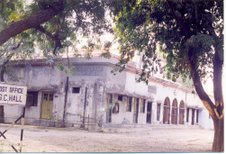
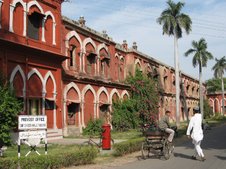
Arnold House: The present Proctor’s office & NRSC Provost’s office in AMU Aligarh was the building named after Prof. Thomas Walker Arnold, to recognize his serves to MAO College and Aligarh Movement.

Allama Shibli Nomani & Prof. Thomas W. Arnold

When Allama Shibli returned to India after performing Hajj, he met Sir Syed Ahmed Khan who had just established M.A.O. College. Allama Shibli Nomani was offered and accepted a teaching position at the MAO College in 1892. He met Prof. Thomas Arnold in 1888 when Prof. Arnold joined MAO College staff from whom Allama Shibli learned first hand modern western ideas and thoughts. At the same time Prof. Arnold learned Arabic from Allama Shibli. They traveled together in 1892 to Syria, Egypt, Turkey and other countries of the Middle East and got direct and practical experience of their societies. Allama Shibli’s scholarship influenced Prof. Thomas Arnold on one hand and on the other he was influenced by Thomas Arnold to a great extent, and this explains the modern touch in his ideas.
When Prof. Arnold left MAO College and joined Government College Lahore, Allama Shibli wrote to his cousin brother and disciple Maulana Hamiduddin Farahi (MAO College graduate and later a Professor of Arabic at MAO College); “Arnold left, College is sad about his departure. He was given a warm farewell.”
In 1904, when Prof. Arnold was finally leaving India to join as the staff of the India Office as Assistant Librarian in Britain, he was given addresses at different places including at MAO College. For the said event Allama Shibli again wrote to Maulana Hamiduddin Farahi ; “ Mr. Arnold is leaving for Britain, MAO College Aligarh will give addresses to him, one of the address will be in Persian too. I have been requested to prepare that, but I am not good in Persian so please prepare one and send it to Prof. Abul Hasan, MAO College immidiately.I will prepare the Arabic one. Mr. Arnold will be coming to Aligarh on 26th February, 1904.”

Association with Sir Allama Iqbal:

Allama Iqbal came over to Lahore for his graduate studies. Lahore was then developing as a centre of higher learning. He chose philosophy as his major subject for which he had a particular bent of mind. He was fortunate in studying philosophy under Prof. Thomas Arnold who was no ordinary teacher. An intimate teacher-pupil relationship soon developed between the two to which Allama Iqbal's poem on Arnold, included in the collection of Bang-i Dara, bears evidence. Allama Iqbal's grateful recognition of what he received from Prof. Arnold is also expressed by him in his dedication to him of his book, The Development ot Metaphysics in Persia. It runs as follows: "This little book is the first-fruit of that literary and philosophical training which I have been receiving from you for the last ten years, and as an expression of gratitude I beg to dedicate it to your name. You have always judged me liberally; I hope you will judge these pages in the same spirit."
When Allama Iqbal went to England for higher studies in Western philosophy, he re-established his contact with Prof. Arnold.